 by Daniel Dice
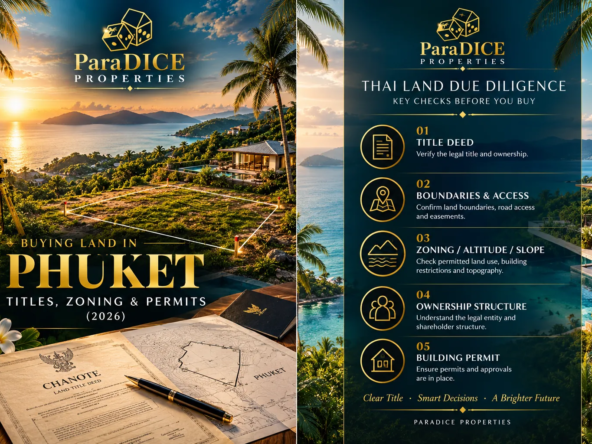
Understanding Property Ownership Structures Before You Invest in Thailand
One of the first questions international buyers ask when considering Phuket property is:
“Can foreigners own property in Thailand?”
The answer is yes—but understanding exactly how ownership is structured is essential before making any investment decision.
Unfortunately, confusion surrounding freehold and leasehold ownership often leads to misunderstandings, missed opportunities, and poor investment choices.
At Paradise Properties (ASIA) Co., Ltd., we believe informed investors make better decisions. This guide explains the key differences between freehold and leasehold ownership in Phuket and how to determine which structure best suits your objectives.
What is Freehold Ownership?
Freehold ownership provides the highest level of ownership rights available under Thai law.
When purchasing a condominium under the foreign freehold quota, the buyer owns the condominium unit outright and receives ownership registered at the local Land Office.
This ownership can be:
- Sold
- Transferred
- Inherited
- Mortgaged (subject to lender approval)
Freehold ownership is generally regarded as the most secure form of property ownership available to foreign buyers.
Foreign Freehold Condominiums
Under Thailand’s Condominium Act, foreigners may own up to 49% of the total saleable area within a registered condominium development.
This is known as the Foreign Freehold Quota.
Benefits include:
✔ Full ownership rights
✔ Strong resale demand
✔ Simpler transfer process
✔ Easier inheritance planning
✔ Greater long-term security
Because foreign freehold units are limited in supply, they often command premium pricing compared to leasehold alternatives within the same development.
What is Leasehold Ownership?
Leasehold ownership allows the purchaser to secure long-term rights to occupy and use a property without owning the land itself.
A typical leasehold structure provides:
- 30-year registered lease
- Potential renewal options
- Rights of occupancy and use
Leasehold arrangements are commonly used for:
- Villas
- Branded residences
- Luxury resort developments
- Beachfront projects
Many of Phuket’s most prestigious developments operate successfully under leasehold structures.
Why Are Villas Usually Leasehold?
Thai law generally restricts direct foreign ownership of land.
Because villas sit on land, foreign purchasers often acquire them through:
- Leasehold arrangements
- Thai company structures (where appropriate)
- Alternative legal ownership mechanisms
Professional legal advice should always be obtained before proceeding.
Advantages of Leasehold Ownership
Leasehold can offer several attractive benefits:
Lower Entry Prices
Leasehold units are often priced below equivalent freehold properties.
Access to Prime Locations
Many of Phuket’s most desirable beachfront and resort developments are available exclusively through leasehold structures.
Luxury Branded Residences
Numerous internationally recognised brands operate successfully under leasehold ownership models.
Attractive Rental Returns
Rental performance is typically influenced more by location and management quality than ownership structure.
Advantages of Freehold Ownership
Freehold ownership remains highly attractive because it offers:
Long-Term Security
Ownership remains indefinite.
Stronger Resale Appeal
Many foreign buyers specifically seek freehold properties.
Easier Estate Planning
Transfer to heirs is generally more straightforward.
Capital Preservation
Limited foreign freehold supply often supports long-term value.
Which Option is Better?
The answer depends entirely on your investment objectives.
Freehold May Be Better If:
- Long-term ownership is important
- Capital preservation is a priority
- You intend to pass the property to future generations
- You value maximum ownership rights
Leasehold May Be Better If:
- You want access to premium beachfront locations
- You prioritise rental income
- You seek lower acquisition costs
- You are comfortable with long-term lease structures
The Most Important Question
Rather than asking:
“Is freehold or leasehold better?”
Investors should ask:
“Which ownership structure best supports my investment goals?”
Every buyer is different.
Every property is different.
Every investment strategy is different.
How ParaDICE Properties Can Help
Our team helps clients understand:
- Ownership structures
- Legal considerations
- Developer credentials
- Investment suitability
- Exit strategies
We work alongside qualified legal professionals to ensure buyers understand exactly what they are purchasing before proceeding.
Final Thoughts
Both freehold and leasehold ownership structures can provide excellent investment opportunities in Phuket.
The key is understanding the differences and selecting the option that aligns with your personal objectives, risk tolerance, and long-term plans.
Before making a decision, seek professional guidance and ensure all ownership structures are fully understood.
Contact ParaDICE Properties Today
For independent property investment advice, ownership guidance, and access to Phuket’s leading developments, speak with our experienced team today.
And remember—qualifying buyers may also benefit from our Strategic Buyer Rebate Program, returning between 1% and 3% of the purchase price on selected properties.